

8 Likes


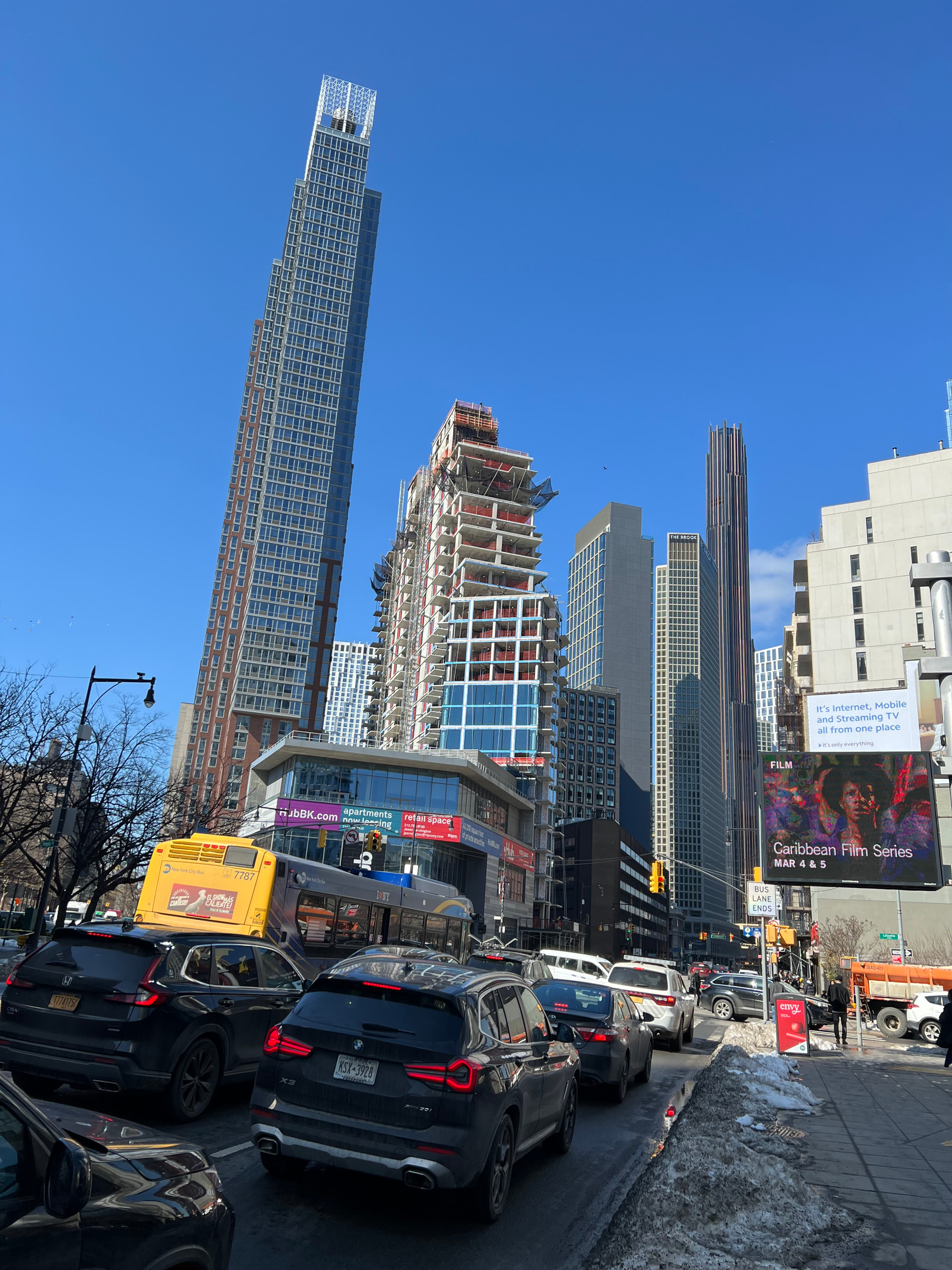
I saw this when visiting downtown Brooklyn. It’s up to the 1st floor and they’re getting ready to move up to higher floors.


13 Likes
They’re prepping the fifth floor, moving along steadily now.
From Livingston Street:

From Flatbush Avenue:

11 Likes


This has risen really fast since I was out there a month ago. That’s quite impressive.
2 Likes
It makes sense until you try to get on a train that’s already packed.
1 Like
Okay, 
2 Likes




R train closest?
The R is not far; either DeKalb or Barclays Center stations are a very easy walk.
But the closest station is definitely Nevins St (2/3/4/5).
2 Likes
That poor station is overwhelmed.
Why in the world could they not make the concrete wall on the floor before the setback the same width as all of the floors below it?

11 Likes


I see your point - maybe. Either way, interesting question. 
My hypothesis. The floor-to-ceiling corner windows on the upper floors would not be possible if the concrete slabs were the same width as the lower floors. Those corner windows are a valuable selling point for these residential towers.
Architecture is mostly form-follows-function: or more accurately - form follows finance.
1 Like
The introduction of the corner column at the setback volume created the need for transfer structure, the extended portion of shear wall on the one floor is acting in a walking column capacity to properly transfer the load of the column down.
A “walking” column is just a column that begins to slowly step after a few floors/at floors to properly transfer load down if/when column need to move from their configuration in plan. The load can be transferred through walking columns, shear walls, or deep transfer beams.
6 Likes